 Skip to content

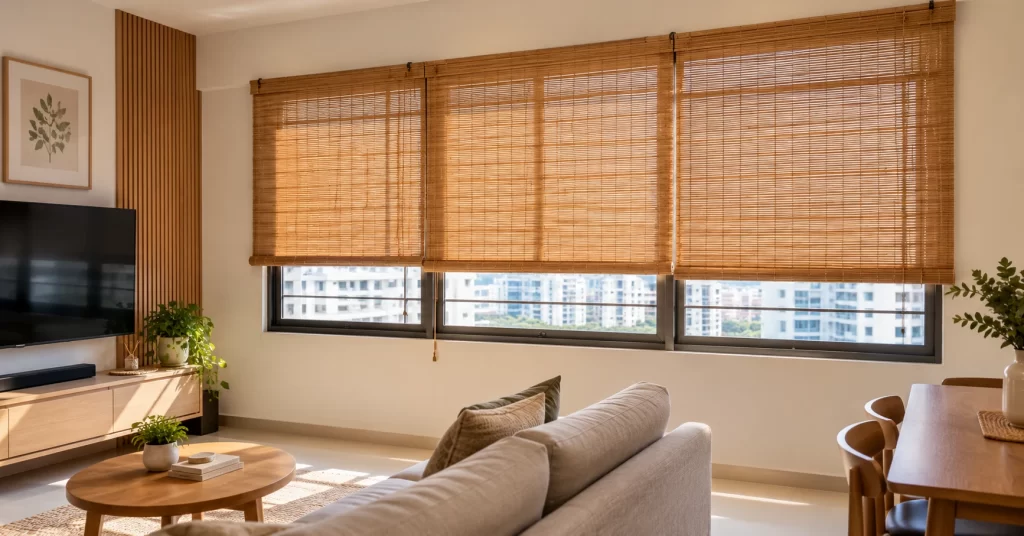
Bamboo blinds are becoming an increasingly popular window furnishing choice in Singapore, combining natural aesthetics with practical everyday benefits. Beyond their eco-conscious appeal, bamboo blinds can help manage sunlight, glare and privacy while adding warmth and texture to a living space.
They are suitable for a wide range of properties, from HDB flats and condominiums to landed homes. With the right material, finish and installation approach, bamboo blinds can also be used in suitable sheltered outdoor and semi-outdoor areas such as balconies, patios and covered corridors.
Why Bamboo Blinds Suit Singapore Homes
Singapore’s warm and humid climate makes the choice of window furnishing particularly important. Bamboo blinds provide shade from direct sunlight while maintaining an open, naturally ventilated feel, making them an attractive option for spaces exposed to strong afternoon sun.
Their versatility also makes bamboo blinds suitable for different types of Singapore homes. Whether you are furnishing an HDB living room, a condominium balcony, or a landed property’s patio, the right bamboo blind should be selected according to the dimensions, orientation, sun exposure and requirements of the space.
The Aesthetic Appeal: Why Homeowners Love the Look
One of the biggest attractions of bamboo blinds is their warm, organic appearance. The natural texture and subtle variations in bamboo create visual depth, helping a room feel more comfortable and inviting without overwhelming the existing interior design.
Bamboo window blinds work particularly well with minimalist, Scandinavian, resort-inspired and tropical interiors. Their understated appearance complements timber furniture, neutral colour palettes, greenery and other natural finishes.
They can also provide a softer alternative to completely opaque window coverings. Depending on the weave and design selected, bamboo blinds offer privacy while still allowing filtered natural light into the room, creating a bright but more comfortable environment.
Practical Everyday Benefits of Bamboo Blinds
Bamboo blinds are not simply a decorative feature. They provide useful everyday control over sunlight, glare and privacy, particularly in rooms with windows that receive strong direct sun.
By creating a layer of shade between the window and the room, bamboo blinds help reduce direct sunlight and glare during sunny days. Their natural construction also maintains a sense of airflow and openness rather than making a space feel completely enclosed.
Another practical advantage is their flexibility in customised applications. For less conventional spaces, they are designed and trimmed to follow the shape of an opening. For example, blinds installed along a slanted rafter or roof structure are shaped to suit the angle while retaining their intended shading function.
This makes them suitable for living rooms, bedrooms, balconies, patios and other areas where conventional rectangular window treatments may not provide the best fit.
An Environmentally Conscious Window Treatment Choice
For homeowners who consider sustainability when selecting home furnishings, bamboo blinds offer an environmentally conscious alternative to some manufactured materials. Bamboo is a natural and renewable material that grows relatively quickly and is used in a range of household products.
However, sustainability also depends on more than the material itself. Factors such as responsible sourcing, manufacturing processes, finishes, durability and product lifespan all play a role.
Choosing a well-made bamboo blind and maintaining it properly helps maximise its useful life and reduce the need for frequent replacement.
For many homeowners, the environmental aspect is an added benefit rather than the only reason to choose bamboo blind. Its natural appearance, practical shading properties and versatility remain important considerations when selecting window blinds for a Singapore home.
Bamboo Blinds vs Synthetic Blinds: Table of Comparison
| Consideration | Bamboo | Synthetic |
| Appearance | Natural variation & texture and warmth | More uniform and consistent finish |
| Light control | Gently filters light for a softer warmer ambience | Depends on material and design; can offer more consistent light control |
| Moisture exposure | Requires more consideration, especially in humid or exposed areas | Generally offers better tolerance to moisture |
| Maintenance | Requires gentle cleaning and care to preserve the natural material | Often easier to clean and maintain |
| Interior Style | Excellent for natural, tropical, resort, oriental and organic-inspired interiors | Often suits modern, minimalist and contemporary interiors |
| Sustainability | Made from renewable natural material; sustainability also depends on sourcing and manufacturing | Environmental impact depends on the material, manufacturing process and lifespan |
| Character | Subtle natural variations, making it more distinctive | More consistent in colour, texture and appearance |
| Suitable in Singapore | Well suited to indoor and sheltered / semi outdoor spaces with appropriate care | A practical option where greater moisture resistance is required |
There is no single window treatment material that is ideal for every home. Bamboo and synthetic blinds each have their own advantages, and the better choice depends on your priorities, the location of the installation and how the space is used.
Bamboo Blinds
Bamboo blinds offer an authentic natural texture, with individual grain patterns and variations that give the material a warmer and more organic appearance. They are particularly suitable for homeowners who want a relaxed, natural and timeless look.
Synthetic Blinds
Synthetic blinds provide a more uniform finish and may suit homeowners looking for a sleek and contemporary appearance. Some synthetic materials also tolerate moisture more readily, which may be useful in areas with greater exposure to humidity.
From an environmental perspective, bamboo is a renewable natural material, while many synthetic blinds are manufactured using plastics or PVC or other processed materials. Nevertheless, the overall environmental impact depends on sourcing, production, durability and disposal.
Ultimately, bamboo blinds are a strong fit for homeowners who prioritise warmth, natural texture and a softer, more organic living environment rather than simply looking for one material to be objectively better than another.
Bamboo Blinds for Indoor and Outdoor Living
The versatility of bamboo blinds makes them suitable for both indoor and appropriately sheltered outdoor applications.
Indoors, they provide privacy and filtered sunlight while complementing living rooms, bedrooms and other frequently used areas.
For balconies, patios and semi-outdoor spaces, bamboo blinds can provide an additional layer of shade from direct sunlight while helping the area retain an open and comfortable atmosphere.
However, not all outdoor spaces are suitable for natural bamboo. The specific product, finish and positioning and degree of exposure should be considered carefully.
For areas exposed to more consistent moisture or occasional rain, a PVC cover can be added to provide an additional layer of protection. Besides helping to shield the bamboo blinds from rain and moisture, the cover can also help protect the surrounding area, making it a practical enhancement for sheltered balconies and other semi–ooutdoor spaces.
Maintenance Tips to Extend Bamboo Blind Lifespan
Like other natural materials, bamboo blinds benefit from regular and appropriate care. Simple maintenance helps preserve their appearance and support their long-term performance.
Dust regularly. Use a soft cloth, feather duster or suitable gentle cleaning tool to remove dust before it accumulates between the natural fibres.
Wipe gently when necessary. For more thorough cleaning, use a lightly damp cloth and wipe gently. Avoid excessive soaking or prolonged exposure to water, as moisture can affect natural fibres over time.
Use gentle cleaning products. Where necessary, use a mild, eco-friendly cleaning solution rather than harsh chemical cleaners that may affect the finish of the bamboo.
Maintain good ventilation. In Singapore’s humid climate, good airflow around the blinds can help minimise moisture build-up.
Avoid prolonged dampness. If the blinds become wet, allow them to dry thoroughly rather than leaving them damp for extended periods.
With consistent care and suitable installation conditions, quality bamboo blinds can continue to provide natural character, privacy and effective shading for many years.
Who Are Bamboo Blinds Suitable For?
Bamboo blinds are a particularly suitable choice for homeowners who want natural-looking window treatments without sacrificing everyday functionality.
They offer a combination of texture, filtered light, privacy, and shade that works across many interior styles.
You may want to consider bamboo blinds if you:
- prefer a natural, textured look;
- want filtered daylight rather than a completely opaque covering;
- need privacy while retaining some natural light;
- are furnishing an HDB, condominium or landed home;
- want shading for a suitable sheltered balcony or semi-outdoor space; or
- prefer natural materials when choosing home furnishings.
Frequently Asked Questions
Can bamboo blinds be customised for unusual window or roof shapes?
Yes. Bamboo blinds are designed and trimmed to follow non-standard openings, including a slanted rafter or roof structure, where they’re shaped to suit the angle while keeping their intended shading function.
This makes them a practical option for spaces where a standard rectangular blind wouldn’t fit well.
How do I clean and maintain bamboo blinds?
Dust them regularly with a soft cloth or feather duster, and wipe gently with a lightly damp cloth for a deeper clean when needed.
Use gentle cleaning products rather than harsh chemicals, and keep the area well-ventilated to help prevent moisture build-up. Avoid soaking the blinds or leaving them wet for extended periods.
Bamboo blinds vs synthetic blinds: which should I choose?
It depends on your priorities and where the blinds will be installed.
Bamboo offers authentic natural texture and warmth that manufactured materials don’t fully replicate, while synthetic options give a sleeker, more uniform finish and may be easier to maintain in areas with greater moisture exposure.
Neither is objectively better. The right choice depends on the look you want, the environment ans how you intend to use the space.
Are bamboo blinds suitable for Singapore’s humid climate?
Yes, bamboo blinds can be suitable for Singapore homes when the product and installation environment are appropriate.
Finished or treated bamboo may offer improved resistance to moisture, but bamboo remains a natural material and should not be exposed to prolonged dampness. Good ventilation and regular maintenance are particularly important in Singapore’s humid climate.
For areas with greater exposure to rain or moisture, a PVC can be considered as an additional protective layer.
Depending on the environment, this can help improve the practicality and longevity of bamboo blinds while providing additional protection from rain.
Are bamboo blinds suitable for HDB flats, or only condos and landed homes?
Bamboo blinds work well across HDB flats, condominiums and landed properties.
The right design and installation depend on the size, layout, orientation and exposure of the specific space rather than the property type. A HDB living room or sheltered balcony can be just as suitable as a condominium or landed home, provided the installation conditions are appropriate.
Can bamboo blinds be used on a balcony?
Yes, bamboo blinds can be used on a suitable sheltered balcony.
A Natural Window Treatment That Balances Style and Function
Bamboo blinds offer more than a distinctive natural appearance. They help reduce glare, provide shade and privacy, and maintain an open feel while adding warmth and timeless character to a home.
Find the Right Bamboo Blinds for Your Home
Choosing the right bamboo blinds is about more than selecting a colour or design.
The size and layout of your space, whether the blinds are installed indoors or in a sheltered outdoor area, the amount of sun exposure, the level of privacy can all affect which option works best.
At Encompass Homes, we believe the best window furnishing is not simply the one that looks good, but the one that suits the space and the way you live.
Whether you are looking to create a warm and cosy living space, add privacy to your balcony, or shade a semi-outdoor area, our team can help you explore bamboo blind options suited to your home’s layout, exposure and lifestyle.
Not sure if bamboo blinds are right for your space?
Talk to our team for a no-obligation consultation and let us help you find a window furnishing solution that looks beautiful, works well and suits the way you live.
